|
SCHOTT North America
Products Ordering Information Application Support News About us
|
General product information
High quality borosilicate glass –
The solid foundation behind Nexterion®
Microarray Slides from SCHOTT
|
SCHOTT Microarray Solutions has exclusive access to 1.0 mm thick
BOROFLOAT® 33 glass (Glass B) for the Nexterion® microarray coated substrates.
BOROFLOAT® 33 is a borosilicate glass that offers high chemical
resistance, low fluorescence, and excellent flatness. The glass is precision cut
into the microscope slide format for standard Nexterion® slides and other
formats, such as the Nexterion® MTP-96 microplate. All slides are laser-cut
to create straight robust edges.
Additional information on different glass types and more detailed specifications
can be found in the section “Uncoated slides”.
|
Chemical stability
|
BOROFLOAT® 33 glass exhibits excellent chemical stability and durability. The
glass provides an inert support for biomolecule immobilization, and hybridization,
and does not leach alkali ions over time. For this reason, borosilicate
glasses are highly suited to microarraying applications.
|
Low Fluorescence
|
The high-purity borosilicate glass demonstrates extremely low and uniform
fluorescence at the Cy3™ and Cy5™ (570 nm and 670 nm) emission wavelengths.
The low fluorescence of the glass offers exceptionally low background
signals during the scanning of a microarray, thereby maximizing the
signal-to-background ratios. Consequently, even very low signal intensities,
such as those from weakly expressed genes, or low abundance proteins, can
be reliably detected.
|
Flatness
|
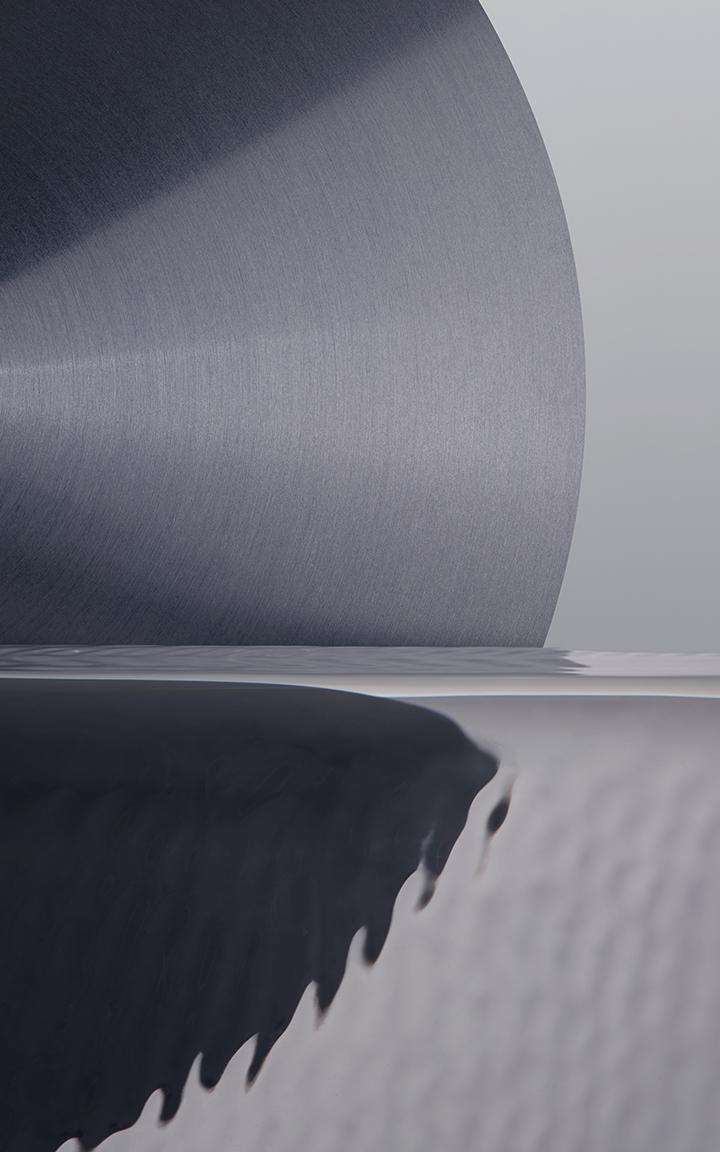
Flatness is an extremely important characteristic for microarray slides, as microarrays
are typically printed with pins that have to come into contact with the
slide surface to deposit probes. BOROFLOAT® 33 is manufactured by a float
glass process to produce an exceptional flatness of ≤50 μm and a high quality
surface finish. "Flatness" is defined by SCHOTT as the accumulated overall
possible thickness deviation. This includes warp, intra-slide thickness deviation,
and inter-slide thickness tolerance.
|
 |
|
Laser cutting
|
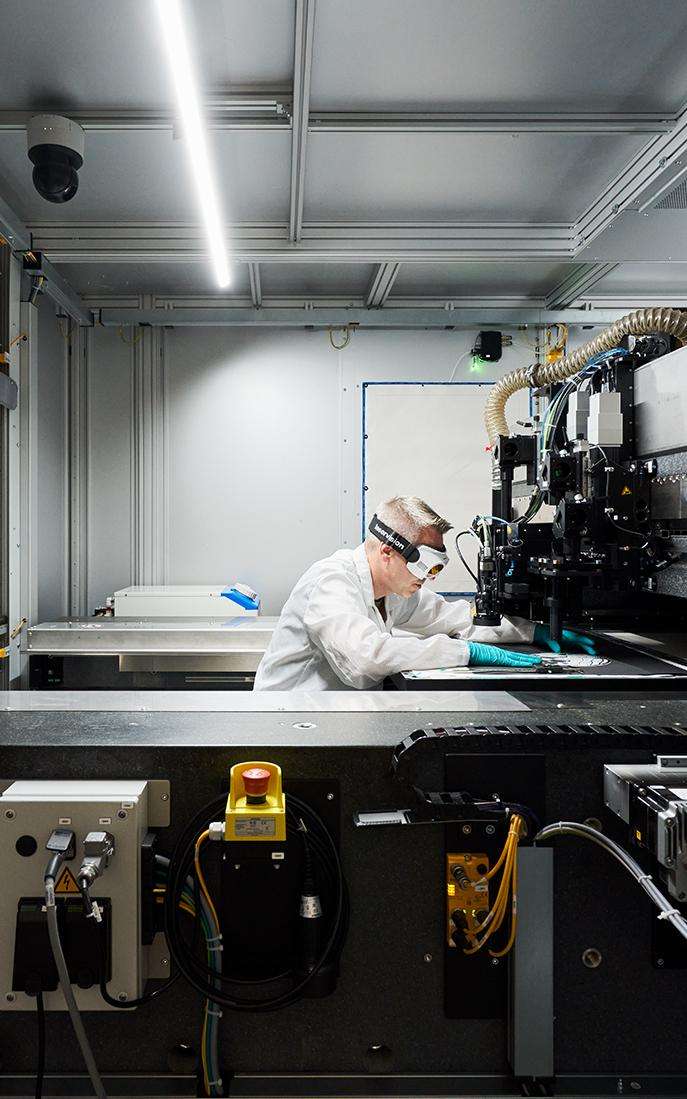
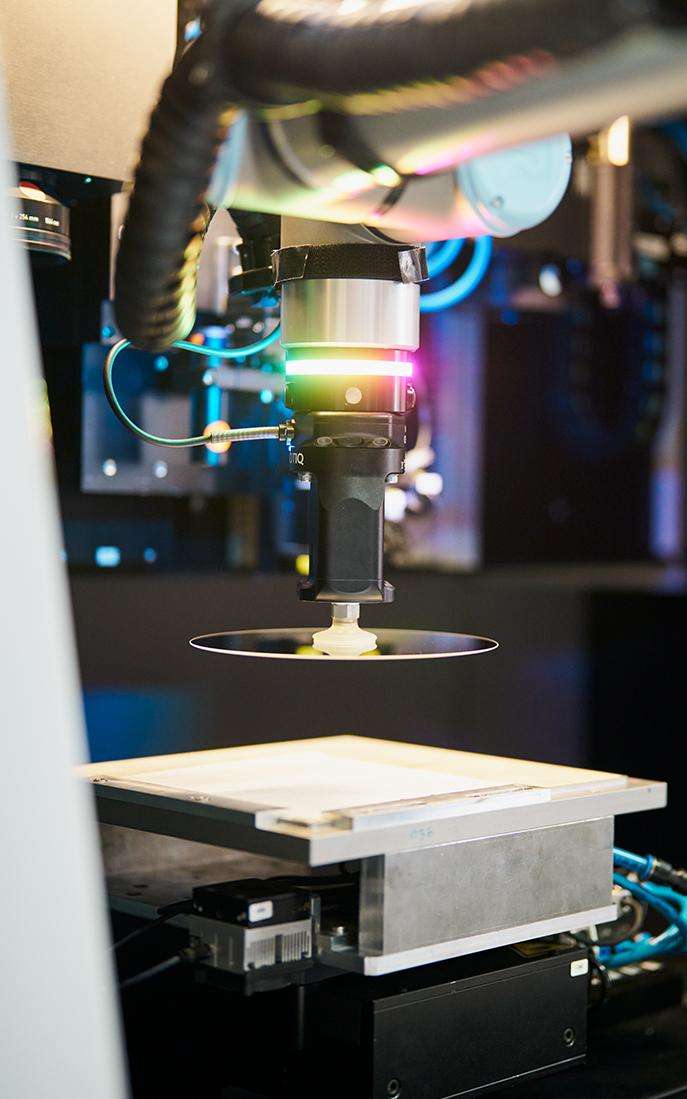
All uncoated and coated slides are cut to size using an innovative laser system
to obtain precise, and highly accurate cut edges with no micro-cracks. A laser
beam precisely heats the glass followed by a jet of cold liquid. This thermally
induced tension causes a fissure in the glass. This results in the highest possible
quality cut, in terms of edge quality and strength. Laser cut edges have a
high strength that resists subsequent fragmentation or chipping. This helps to
ensure the microarray slide surface remains free of particle contamination.
|
 |
 |
edge of a laser cut slide
|
edge of a conventional slide
|
|
Contact
Microarray Solutions SCHOTT North America Inc.
5530 Shepherdsville Road Louisville, KY 40228 USA
| +1 -502-657-4431 |
| +1 -502-966-4976 |
E-mail
More contacts
|