Home Help Sitemap Locations
print this page  email this page
Home Advanced Optics Our Products Zerodur®
SCHOTT North America

Advanced Optics Home
Our Products
Aspherical Lenses
Calcium fluoride (Lithography)
Coating
Contrast Enhancement Filters
Cylindrical Lenses
DWDM Substrates
Fast Axis Collimation (FAC) Micro-Lenses
Fiber Rods
Fused Silica (Lithography)
Glass Filters
Grin Lenses
Instrument Glasses
Interference Filters
Laser Glass
Machined Blanks
Materials for Precision Molding
Molded Aspherical Lenses
Mounting & Assembling
Optical Glass
Plane Parallel Substrates
Precision Gobs
Pressings
Zerodur®

Projects
Grantecan Project
Exploring Space
Neutron Science

Order online
Order Products
Quote Requests

ZERODUR®

Product Information


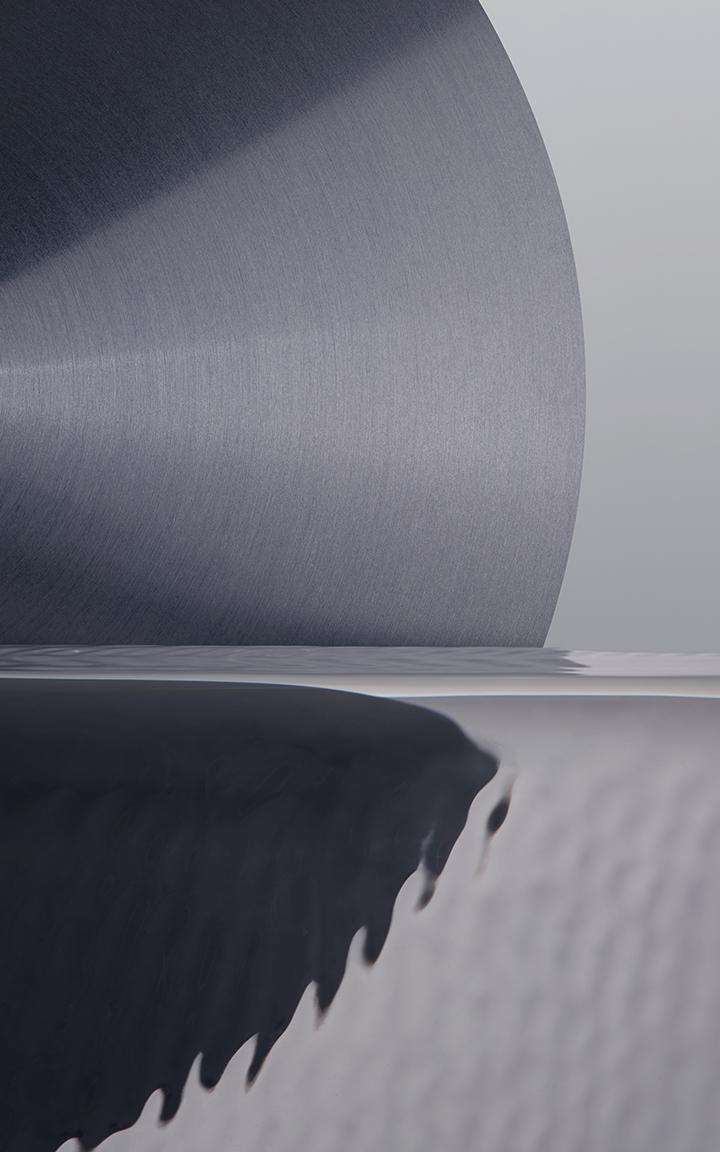
ZERODUR® is a glass ceramic with an extremely low thermal expansion coefficient. The most important properties of ZERODUR® are:
  • Nearly zero thermal expansion with outstanding 3D homogeneity
  • High internal quality
  • Good processing behaviour
  • Can be polished to a very high accuracy
  • Can be coated easily
  • Low Helium permeability
  • Non-porous
  • Good chemical stability


Applications

  • Astronomy:

  • For more than 30 years, ZERODUR® has been the favored material for mirror substrates of earthbound and orbital telescopes.
    ZERODUR® can be made in large amounts with reproducible quality and is therefore suited for future extremely large telescopes (ELTs) in the 20 m to 100 m class.
    Modern fabrication technologies enable the production of structures with more than 65% weight reduction. ZERODUR® is the ideal mandrel material for the shaping of mirror shells in future x-ray telescope projects due to the excellent homogeneity of its coefficient of thermal expansion.

  • Lithography:

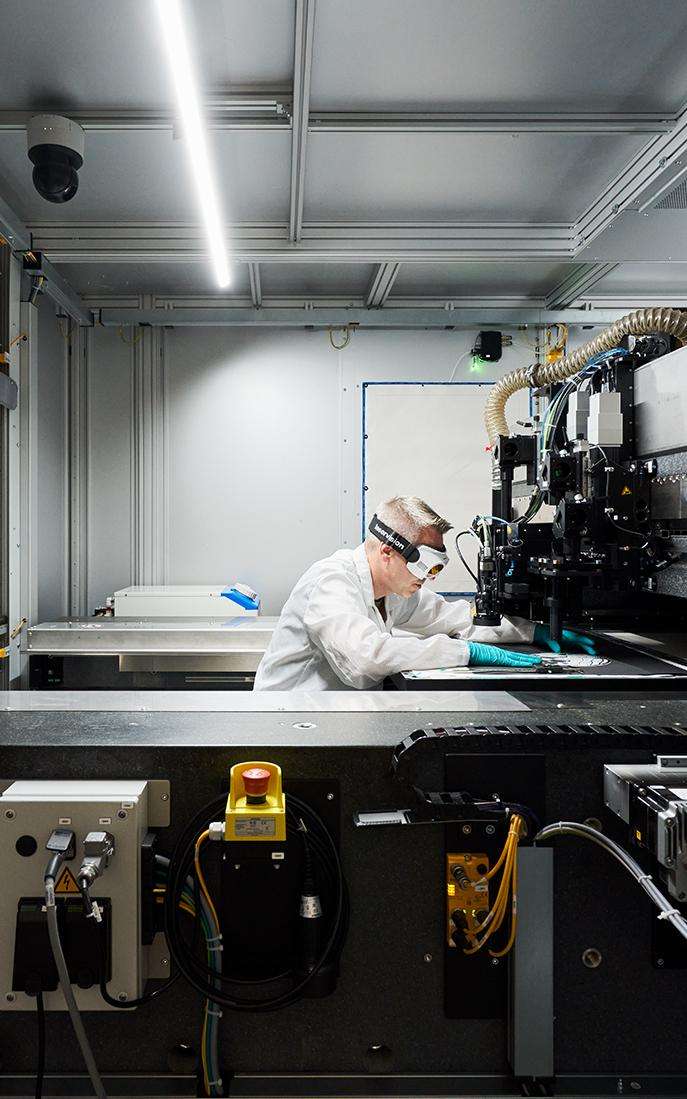
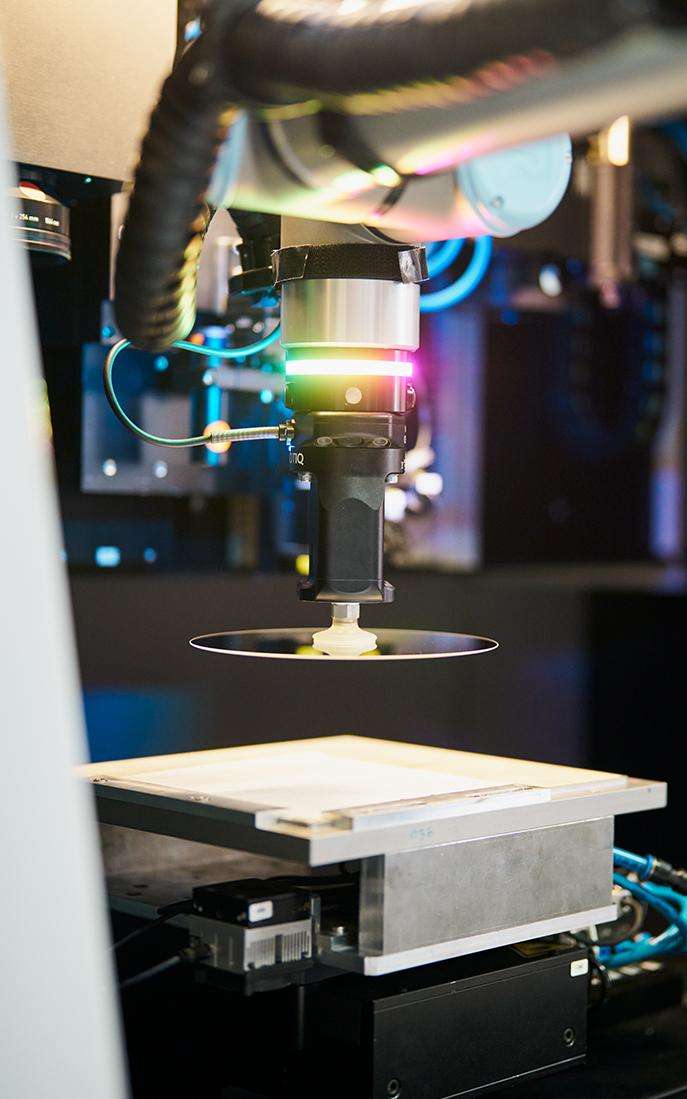
  • ZERODUR® is used as a movable mechanical part in wafer stepper and scanner machines to achieve precise and reproducible wafer positioning. ZERODUR® is an ideal substrate material for reflective optics in the forthcoming EUV lithography due to its almost zero thermal expansion, outstanding homogeneity and good processing behavior.

  • Measurement Technology:

  • The extremely low thermal expansion and proven long-term dimensional stability of ZERODUR® make it an ideal reference standard for measurement instruments.

  • Mechanics:

  • ZERODUR® can be produced in increasingly complex geometries using a combination of modern processing technologies.

  • Further Applications:

  • ZERODUR® has very good transmission properties in the optical and infrared spectral range and a high optical homogeneity. Because of these properties ZERODUR® is also often used in optical systems.


    Forms of Supply

    ZERODUR® can be supplied in the form of discs, rectangular blocks, prisms, rods and cut pieces measuring from a few cm up to approximately 4m in length. Modern CNC processing equipment and a variety of grinding technologies allow the generation of complex geometries and filigree structures at the customer’s request.


    Specifications

  • Thermal Expansion Coefficient:

  • Individual pieces of ZERODUR® (discs, plates, rods) can be supplied with a mean coefficient of linear thermal expansion in the temperature range 0° to 50°C in three expansion classes as follows:

      Expansion class 2 0 ± 0.10*10-6 K-1
      Expansion class 1 0 ± 0.05*10-6 K-1
      Expansion class 0 0 ± 0.02*10-6 K-1

    ZERODUR® exhibits excellent homogeneity of the linear thermal expansion coefficient. Typical values are between 0.01 and 0.02*10-6 K-1.
    On request homogeneities < 0.01*10-6 are possible.

    ZERODUR® may be used as a mechanical component as well as a window at temperatures up to 600 °C. For applications up to 850°C ZERODUR® K20 was developed as a new material modification. The material has an expansion coefficient of 2.0*10-6 K-1 between 20° - 700° C and 1.5*10-6 K-1 at room temperature.


  • Internal Quality
  • :
    The following applies for the internal quality of “standard” ZERODUR® with typical dimensions < 500 mm:

      Average number of inclusions 5 / 100 cm3
      Maximum diameter of single inclusions 3.0 (1.4 within the critical volume)
      Striae (birefringence) < 60 nm / striae
      Bulk stress (birefringence) < 6 nm / cm

  • Further Properties
  • :

      Density 2.53 g/cm3
      Thermal conductivity at 20°C 1.46 W/(m*K)
      Thermal diffusivity at 20°C 0.72*10-6 m2/s
      Thermal capacity 0.8 J/(g*K)
      Young’s modulus at 20°C 90.3 GPa
      Poisson’s ratio 0.243
      Knoop hardness 0.1/20 620

    Information on tolerances for larger pieces or tighter tolerances can be found in the ZERODUR® catalog or are available on request.


    Quality Assurance

    ZERODUR® parts are inspected during all stages of fabrication. Additionally an intensive final inspection is carried out. Modern measurement equipment is used for the inspection:

    Thermal expansion coefficient: Highly accurate dilatometer equipment (with reference standards provided by the PTB).
    Geometry and shape: Mobile and stationary 3D coordinate measurement machines with high accuracy.
    Surface quality: Roughness measurement equipment
    Internal quality: Accurate measurement microscopes and stress measurement setups according to the „de Senarmont“ method.
    Optical homogeneity: Interferometer with aperture up to 500 mm in diameter.


    For more information please contact:

    Advanced Optics
    SCHOTT North America, Inc.
    400 York Avenue
    Duryea, PA 18642
    USA
    Phone: + 1 (570) 457-7485
    Fax: + 1 (570) 457-6960
     E-mail
    www.us.schott.com/optics_devices/


    Business Contact
    Advanced Optics
    SCHOTT North America, Inc.

    400 York Avenue
    Duryea, PA 18642
    USA

     + 1 (570) 457-7485
     + 1 (570) 457-6960
     E-mail
    more contacts 

    back to overview Top
    ©2008 SCHOTT North America, Inc. - Legal
    Home